dialect Hear it!

dialect definition

dia·lect (ə lekt′)

noun

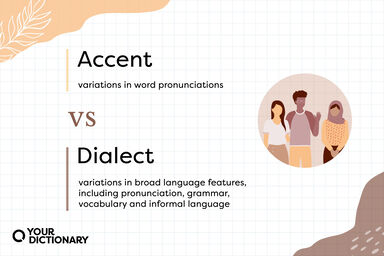
  1. the sum total of local characteristics of speech
  2. Rare the sum total of an individual's characteristics of speech; idiolect
  3. popularly any form of speech considered as deviating from a real or imaginary standard speech
  4. Linguis.
    1. a form or variety of a spoken language, including the standard form, peculiar to a region, community, social group, occupational group, etc.: in this sense, dialects are regarded as being, to some degree, mutually intelligible while languages are not mutually intelligible
    2. any language as a member of a group or family of languages English is a West Germanic dialect

Etymology: L dialectus < Gr dialektos, discourse, discussion, dialect < dialegesthai, to discourse, talk < dia, between (see dia-) + legein, to choose, talk (see logic)

adjective

of or in a dialect dialect ballads

Related Forms:

Webster's New World College Dictionary Copyright © 2005 by Wiley Publishing, Inc., Cleveland, Ohio.
Used by arrangement with John Wiley & Sons, Inc.

dialect Synonyms

dialect

n.

  1. idiom, accent, vernacular, patois, slang, jargon, argot, cant, lingo*, pidgin*, creole; see also accent 3, language 1.

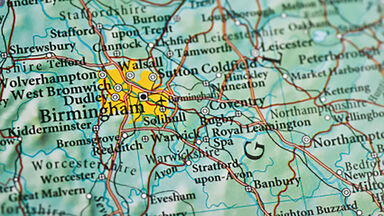
    Accents and dialects of English include --- United States: Standard American, stage, Northern, Midland, North Midland, South Midland, Black, Southern, General American, Eastern New England, Inland North, Boston, Down East, Upstate New York, New York City, Bronx, Brooklyn, Chelsea, Virginia Piedmont, Highland Southern, Southern Highlands, Southern Tidewater, Coastal Southern, Gulla, Southern Appalachian, Southern Louisiana, Gulf States, Deep South, Texas, Cajun, Chicago, Western, Southwest, Northwest; British Isles: British Standard, Received Standard, BBC, public-school, Northern, Midland, Birmingham, Southern, cockney, Southeastern, Kentish, Gloucestershire, Devonshire, Cornish, Shropshire, Oxford, Lincolnshire, Norfolk, Yorkshire, Lancashire, Liverpool, Northumbrian, Lowland Scots, Glasgow, Highland Scots, Edinburgh, Inverness, Welsh, Irish, Dublin, Ulster, Belfast, Aran Islands, Western Irish; others: Australian, New Zealand, South African, Canadian, Maritime, Ontario, Western Canadian.

  2. Accents and dialects of languages other than English include --- French: langue d'oc, langue d'oïl (both French), Parisian, Norman, Anglo-Norman, Breton, Gascon, Provençal, Occitan, French Canadian, Algerian; Spanish: Castilian, Catalan, Andalusian, South American, Central American, Mexican, Puerto Rican, Cuban, Philippine; German: High German, Bavarian, Franconian, Swabian, Swiss German, Austrian, Rhenish, Yiddish; Low German, Plattdeutsch, Prussian, Berlin, Hamburg, Saxon, Pennsylvania Dutch, Pennsylvania German; Italian: Tuscan, Piedmontese, Roman, Venetian, Neopolitan, Sicilian; Russian: Muscovite, Little Russian, Belorussian, White Russian, Georgian, Siberian; Chinese: Mandarin, Fukien, Peking, Beijing, Cantonese, Manchurian, Shansi.

dialect, in this comparison, refers to a form of a language used within a particular locality or group and differing from the standard language in matters of pronunciation, syntax, etc.; vernacular today commonly refers to the informal or colloquial spoken variety of a language as distinguished from the formal or literary variety; cant refers to the distinctive stock words, phrases, and clichés used by a particular sect, class, etc. clergymen's cant; jargon is used of the special vocabulary and idioms of a particular class, occupational group, etc., esp. by one who is unfamiliar with these; argot refers esp. to the secret jargon of thieves and tramps; lingo is a humorous or mildly contemptuous term applied to any language, dialect, or jargon by one to whom it is unintelligible; slang refers to highly informal speech and particularly to new words, phrases, and extended senses, esp. when restricted in use to an identifiable group college slang


Webster's New World Roget's A-Z Thesaurus Copyright © 1999 by Wiley Publishing, Inc., Cleveland, Ohio.
Used by arrangement with John Wiley & Sons, Inc.

dialect Usage Examples

Preposition: of

  • Scot: Dialects of Scots Scots has a wide range of dialects.

Converse of object

  • speak: The dialect spoken by everyone looked toward Oslo rather than London.

Adjective modifier

  • Kurdish: The number of Kurds with access to Internet who can read in Kurdish dialects is another parameter.

Modifies a noun

  • poet: The 19th century Dorset dialect poet William Barnes wrote on Bridport Harbor.
dialect usage examples (more)

The word usage examples above have been gathered from various sources to reflect current and historical usage. They do not represent the opinions of YourDictionary.com.

dialect quotes

Since our concern was speech, and speech impelled us To purify the dialect of the tribe And urge the mind to aftersight and foresight.

-Eliot,T(homas) S(tearns)

Her occasional pretty and picturesque use of dialect wordsöthose terrible marks of the beast to the truly genteel.

-Hardy,Thomas

Most of their discourse was about hunting, in a dialect I understand very little.

-Pepys, Samuel

dialect quotes (more)

Webster's New World Dictionary of Quotations Copyright © 2005 by Chambers Harrap Publishers Ltd. All rights reserved. Published by Wiley, Hoboken, NJ. Used by arrangement with John Wiley & Sons, Inc.

Link to this page:

Cite this page:

MLA Style

"dialect." Webster's New World College Dictionary. 2009

  • Your Dictionary. 5 July 2009
  • <www.yourdictionary.com/dialect>

APA Style

dialect. (2009). In Webster's New World College Dictionary

  • Retrieved July 5th, 2009, from www.yourdictionary.com/dialect

Comments:

Please or Register to post a comment