language
| Jump To: |
|
lan·guage (laŋ′gwij)
noun
- human speech
- Archaic the ability to communicate by this means
- a system of vocal sounds and combinations of such sounds to which meaning is attributed, used for the expression or communication of thoughts and feelings
- the written representation of such a system
- any means of expressing or communicating, as gestures, signs, or animal sounds body language
- a special set of symbols, letters, numerals, rules, etc. used for the transmission of information, as in a computer
- all the vocal sounds, words, and ways of combining them common to a particular nation, tribe, or other speech community the French language
- the particular form or manner of selecting and combining words characteristic of a person, group, or profession; form or style of expression in words the language of teenagers
- the study of language in general or of some particular language or languages; linguistics
- Informal coarse or obscene words and expressions
Etymology: ME < OFr langage < langue, tongue < L lingua, tongue, language, altered (by assoc. with lingere, to lick) < OL dingua < IE *dṇhwa > OE tunge, tongue
speak the same (or someone's) language
Webster's New World College Dictionary Copyright © 2005 by Wiley Publishing, Inc., Cleveland, Ohio.
Used by arrangement with John Wiley & Sons, Inc.
language
n.
A means of communication
speech, dialect, voice, utterance, expression, vocalization, phonation, native tongue, mother tongue, articulation, meta-language, object language, sense-datum language, thing-language, physical language; language of diplomacy, language of chemistry, language of flowers, etc.; accent, word, sign, signal, pantomime, gesture, facial gesture, vocabulary, diction, idiom, local speech, broken English, pidgin English, lingo, brogue, polyglot, patois, vernacular, lingua franca, trade language, jargon, gibberish, debased speech, inscription, picture writing, hieroglyphics, cuneiform, printing, writing, poetry, prose, song, style, phraseology, lingo*; see also communication 1, conversation, speech 2.The study of language, sense 1
morphology, phonology, phonemics, morphemics, morphophonemics, phonics, phonetics, semantics, semasiology, criticism, letters, linguistic studies, history of language, etymology, dialectology, linguistic geography, anthropological linguistics, sociolinguistics, lexicostatistics, glottochronology, structural linguistics, descriptive linguistics, taxonomic linguistics, historical linguistics, diachronic linguistics, comparative linguistics, synchronic linguistics, contrastive grammar, descriptive grammar, prescriptive grammar, phrase-structure grammar, PS grammar, generative grammar, immediate-constituent grammar, IC grammar, transformational grammar, tagmemics, stratificational grammar, glossematics, Prague school of linguistics, London school of linguistics, Firthian school of linguistics; see also anthropology, etymology, grammar, linguistics, literature 1.Types of languages include: synthetic, inflectional, analytic, isolating, distributive, incorporating, symbolic, fusional, polytonic, agglutinative, computer, artificial, polysynthetic.
Families of language include: Indo-European, Finno-Ugric, Altaic, Caucasian, Afro-Asiatic, Nilo-Saharan, Niger-Congo, Khoisan, Malayo-Polynesian, Dravidian, Austro-Asiatic, Sino-Tibetan, Kadai, Eskimo-Aleut, Athabaskan, Algonquian, Mosan, Iroquoian, Natchez-Muskogean, Siouan, Penutian, Hokan, Uto-Aztecan, Mayan.
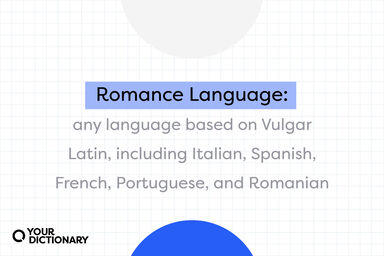
Indo-European languages include --- Greek: Modern Greek; Celtic: Breton, Welsh, Scottish Gaelic, Irish Gaelic; Italic: Latin, Romanian, Italian, Rhaeto-Romanic, French, Provençal, Spanish, Catalan, Portuguese; Germanic: Swedish, Danish, Norwegian, Icelandic, Modern High German, Yiddish, Afrikaans, Dutch, Flemish, Modern Low German, Frisian, English; Slavic: Polish, Czech, Slovak, Bulgarian, Slovenian, Serbo-Croatian, Ukrainian, Russian; Baltic: Latvian, Lithuanian; Iranian: Persian, Pashto; Indo-Aryan: Bengali, Punjabi, Hindi, Urdu, Marathi, Gujarati, Romany, Dard.
Other Eurasian languages include --- Uralic: Finnish, Estonian, Hungarian, Samoyed; Altaic: Turkish, Mongolian; Georgian; Abkhasian, Kabardian, Chechen; Basque; Etruscan.
African and Asian languages include --- Afro-Asiatic or Hamito-Semitic: Akkadian, Assyro-Babylonian, Aramaic, Syriac, Phoenician, Talmudic, Hebrew, Arabic, Amharic, Egyptian, Coptic, Tuareg, Somali, Hausa; Sumerian; Niger-Congo: Wolof, Mande, Ewe, Yoruba, Ibo, Efik, Tiv, Swahili, Kikuyu, Rwanda, Zulu, Xhosa, Swazi, Venda; Nilo-Saharan: Songhai, Kanuri, Nilotic, Dinka, Nuer, Masai; Khoisan: Sandawe, Hatsa, Bushman-Hottentot.
Asian and Malayo-Polynesian languages include --- Japanese, Ryukyu; Korean; Sino-Tibetan: Burmese, Tibetan, Mandarin, Cantonese; Kadai: Thai, Siamese, Laotian, Lao; Miao-Yao; Malayo-Polynesian: Malay, Indonesian, Javanese, Balinese, Tagalog, Filipino, Malagasy, Micronesian, Hawaiian, Tahitian, Samoan, Maori, Fijian; Papuan, Australian; Tasmanian; Dravidian: Telegu, Tamil, Kanerese, Kannada, Malayalam; Austro-Asiatic: Santali, Palaung, Mon-Khmer, Vietnamese.
North, Central, and South American languages include --- Algonquian: Massachusetts, Delaware, Mohegan, Penobscot, Pasamaquoddy, Fox-Sauk-Kickapoo, Cree, Menomini, Shawnee, Blackfoot, Arapaho, Cheyenne; Wiyot, Yurok; Kutenai; Salishan: Tillamook, Lillooet; Wakashan: Nootka, Kwakiutl; Muskogean: Creek, Choctaw-Chickasaw, Seminole; Natchez, Chitimacha; Iroquoian: Cherokee, Huron, Wayondot, Erie, Oneida, Mohawk, Seneca, Cayuga, Susquehanna, Conestoga; Siouan: Biloxi, Dakota, Mandan, Winnebago, Hidatsa, Crow; Caddoan: Caddo, Wichita, Pawnee; Yuchi; Aleut, Eskimo; Penutian: Tsimshian, Maidu, Miwok, Klamath-Modoc; Zuni; Hokan: Karok, Shasta, Washo, Pomo; Subtiaba-Tlapanec, Tequistlatec, Jicaque; Comecrudo, Tonkawa; Mayan: Kekchi, Quiche, Tseltal-Tsotzil, Tojolabal, Yucatec; Totonac; Mixe, Zoque, Vera Cruz; Huave; Zapotec, Chatino; Mixtec; Pueblo, Popoluca; Otomi, Pame; Tarascan; Uto-Aztecan: Tubatulabal, Luiseño, Tepehuan, Pima-Papago, Hopi, Huichol, Nahuatl, Aztec, Northern Paiute, Paviotso, Mono, Shoshoni-Comanche, Southern Paiute-Ute, Chemehuevi; Kiowa-Tanoan; Keresan; Na-Dené: Haida, Tlingit, Athabaskan, Chipewyan, Apachean, Navaho, Hupa; Yukian; Quechua; Aymara; Araucanian.
speak the same language
Webster's New World Roget's A-Z Thesaurus Copyright © 1999 by Wiley Publishing, Inc., Cleveland, Ohio.
Used by arrangement with John Wiley & Sons, Inc.
Converse of object
- speak: Global business success therefore seems simple speak a foreign language.
Adjective modifier
- foreign: A voice then asks you a question in the foreign language.
Modifies a noun
- therapist: The problem of ' Reference ' didn't seem to bother language therapists in the slightest!
Noun used with modifier
- programming: The module provides a detailed introduction to the Perl programming language.
The word usage examples above have been gathered from various sources to reflect current and historical usage. They do not represent the opinions of YourDictionary.com.
American art, like the American language and American education, was as far as possible sexless.
I do not mind what language an opera is sung in so long as it is a language I don't understand.
Entitlement spendingöthe politics of greed wrapped in the language of love.
Webster's New World Dictionary of Quotations Copyright © 2005 by Chambers Harrap Publishers Ltd. All rights reserved. Published by Wiley, Hoboken, NJ. Used by arrangement with John Wiley & Sons, Inc.
Link to this page:
Cite this page:
MLA Style
"language." Webster's New World College Dictionary. 2009
- Your Dictionary. 4 July 2009
- <www.yourdictionary.com/language>
APA Style
language. (2009). In Webster's New World College Dictionary
- Retrieved July 4th, 2009, from www.yourdictionary.com/language

Comments:
Please Login or Register to post a comment